
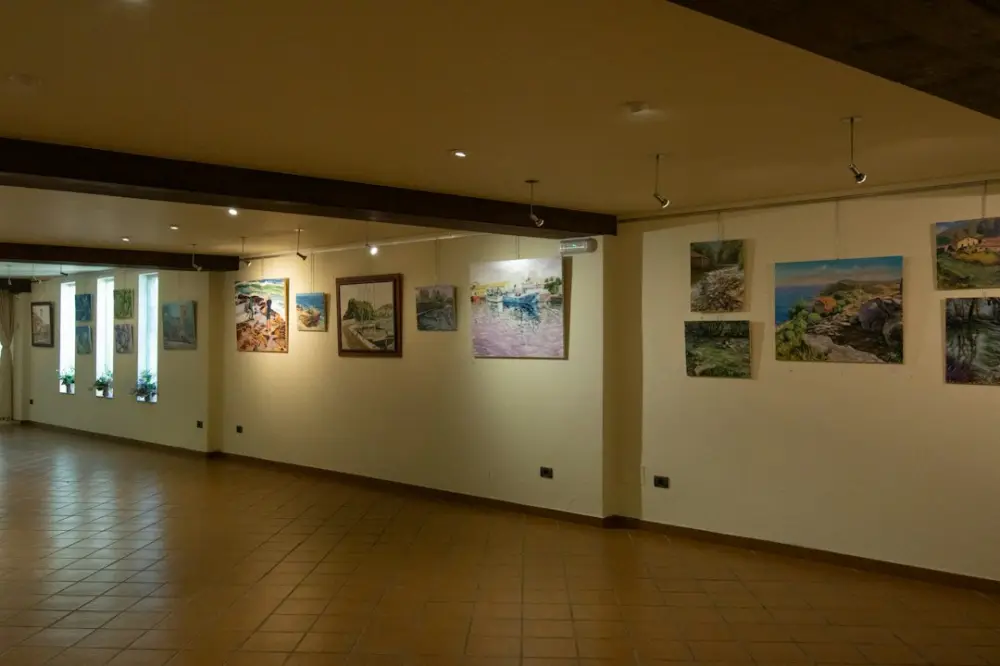
Collection coherence in visual curation refers to the underlying logic and aesthetic harmony that binds individual artworks into a singular, meaningful assembly. It involves aligning themes, techniques, or visual languages to ensure the collection communicates a clear narrative rather than appearing as a fragmented group of unrelated objects for the viewer.
Achieving this coherence requires looking beyond the merit of a single piece to see how it interacts with its neighbors. In a physical gallery or digital space, the relationship between works—dictated by color palettes, medium, or historical context—determines whether the viewer perceives a deliberate story or a random assortment.
Coherence does not demand uniformity. A common mistake in early curation is the assumption that every piece must look identical in style or color. Instead, a coherent collection functions like a well-constructed sentence: the individual words (artworks) vary in length and sound, but they are governed by a shared grammar (curatorial logic). For example, a collection of 19th-century botanical illustrations may include various plant species and different illustrators, but the shared medium of watercolor on vellum and the consistent scientific focus provide the necessary thread of logic.
When a collection lacks this thread, the viewer often feels a sense of visual friction. This friction distracts from the individual works, as the brain struggles to find a pattern or a reason for the objects to occupy the same space. By establishing a clear curatorial boundary, the curator allows the viewer to focus on the nuances of the art rather than the confusion of the presentation. This is particularly vital when selecting works around a curatorial idea, as the strength of the concept relies entirely on the visual evidence provided by the assembly.
Core Components of Aesthetic Unity
Aesthetic unity is built on tangible elements that the eye can easily categorize. Color is often the most immediate tool for creating harmony. This does not mean every piece must be monochromatic; rather, a shared tonal temperature or a recurring accent color can bridge the gap between disparate styles. In a gallery setting, using a specific palette of warm earth tones across several oil paintings and ceramic sculptures can make the transition between 2D and 3D works feel natural.
Texture and medium also play significant roles. A collection that mixes high-gloss digital prints with rough-hewn wooden sculptures requires a strong conceptual bridge to feel unified. Without it, the materials may clash. To mitigate this, curators often use consistent mounting or framing techniques. For instance, placing a diverse set of charcoal sketches and architectural photographs in identical walnut frames with matching off-white matting creates a visual "container" that signals to the viewer that these items belong together. This is a fundamental aspect of modern gallery inspiration: creating balanced visual displays that feel intentional and professional.
Scale and proportion are the final components of this unity. The physical "weight" of an artwork—how much visual space it occupies—must be balanced against its neighbors. A massive, dark canvas placed next to a tiny, delicate line drawing can overwhelm the smaller piece unless the spacing is handled with extreme care. In a small independent gallery, curators might use a "visual anchor," such as a medium-sized central work, to balance smaller pieces clustered around it, ensuring no single wall feels lopsided or cluttered.
Techniques for Evaluating Collection Harmony
Evaluating harmony is an iterative process that often involves stepping back from the individual pieces to view the collection as a whole. One practical technique used by professionals is the "long view" or the "squint test." By standing at the far end of a room and squinting, the curator can obscure the details of the art and focus purely on the blocks of color, light, and shadow. If one area of the room appears as a dark, heavy blotch while the rest is airy and light, the collection lacks balance.
Digital mockups have become an essential tool for this evaluation. Before a single nail is driven into a wall, curators can use software like Adobe Photoshop or dedicated 3D modeling tools such as SketchUp to visualize the layout. This allows for rapid experimentation with sequencing. A curator might realize that a series of portraits works better when arranged chronologically by the subject's age, or perhaps more effectively when grouped by the direction the subjects are facing. This digital phase is where the logic of curation is tested against the reality of spatial constraints.
Another technique is the use of a "physical storyboard." By printing small, thumbnail-sized versions of the artworks and pinning them to a foam board, the curator can physically move pieces around. This tactile approach often reveals connections that are not obvious on a computer screen. For example, the curve of a shoreline in a landscape photograph might perfectly mirror the curve of a torso in a nearby sculpture. Identifying these subtle visual echoes is what transforms a simple group of objects into a sophisticated, coherent collection.
Continue the Conversation
Reflecting on collection coherence is not a task that ends once the art is on the wall. It is an ongoing practice of observation and refinement. For those managing smaller spaces or personal collections, the most important takeaway is the power of editing. It is often tempting to include every high-quality piece available, but true coherence often requires the discipline to exclude a beautiful work if it disrupts the established narrative or visual flow. The absence of a jarring element is often more valuable than the presence of an extra masterpiece.
The goal of visual curation is to create an environment where the works can speak to one another, and where the viewer feels guided through a deliberate experience. This requires a calm, methodical approach to spacing, lighting, and thematic grouping. By prioritizing the relationship between pieces as much as the pieces themselves, curators can build displays that resonate on a deeper level. At Belgrave Gallery, these principles of coherence and intentionality are central to the philosophy of curation, ensuring that every exhibition serves as a clear, unified statement for the creative community.